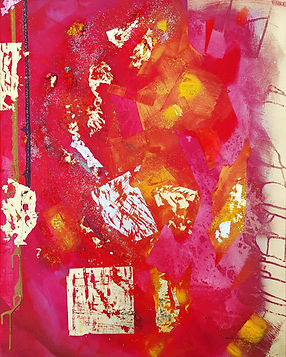

Modern Icons — Where Wounds Become Light

Angela Li’s (AATONAU.com) critique of my Modern Icons collection felt like a lantern held up inside the world I have been building. She writes that my work stands “between contemporary abstraction, devotional imagery and materially assertive relief painting” — and that borderland is precisely where my images begin.
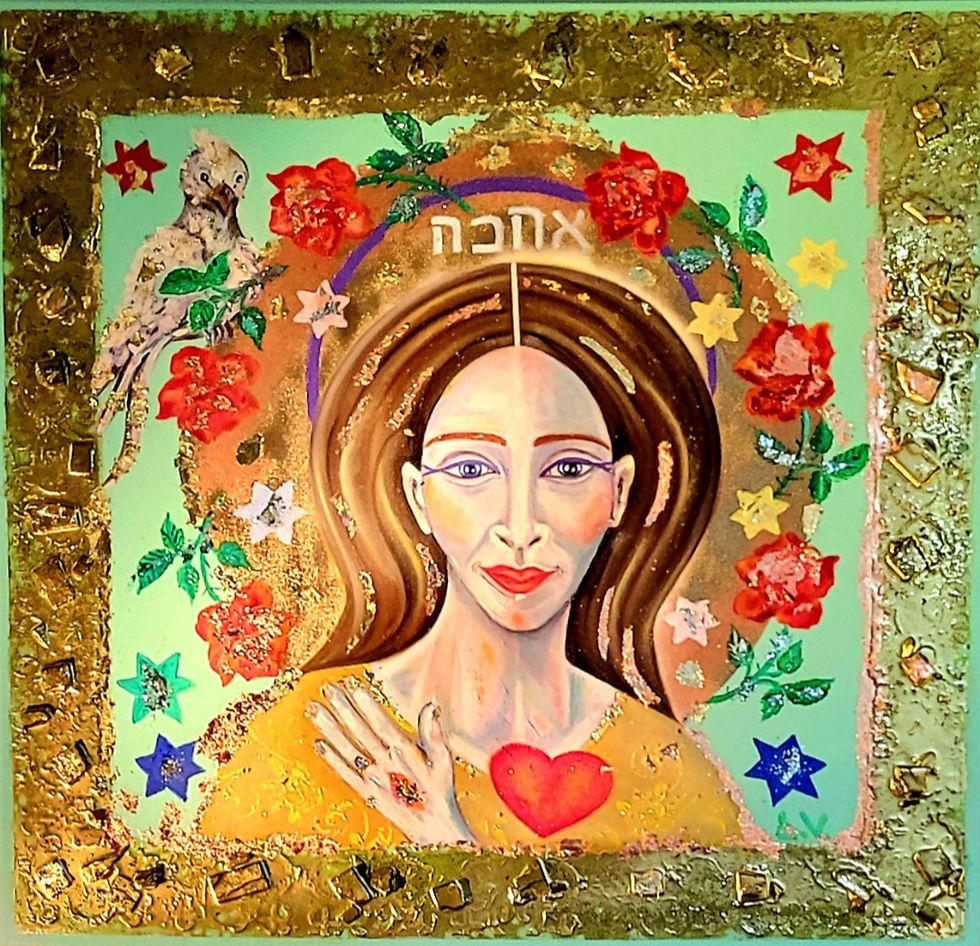
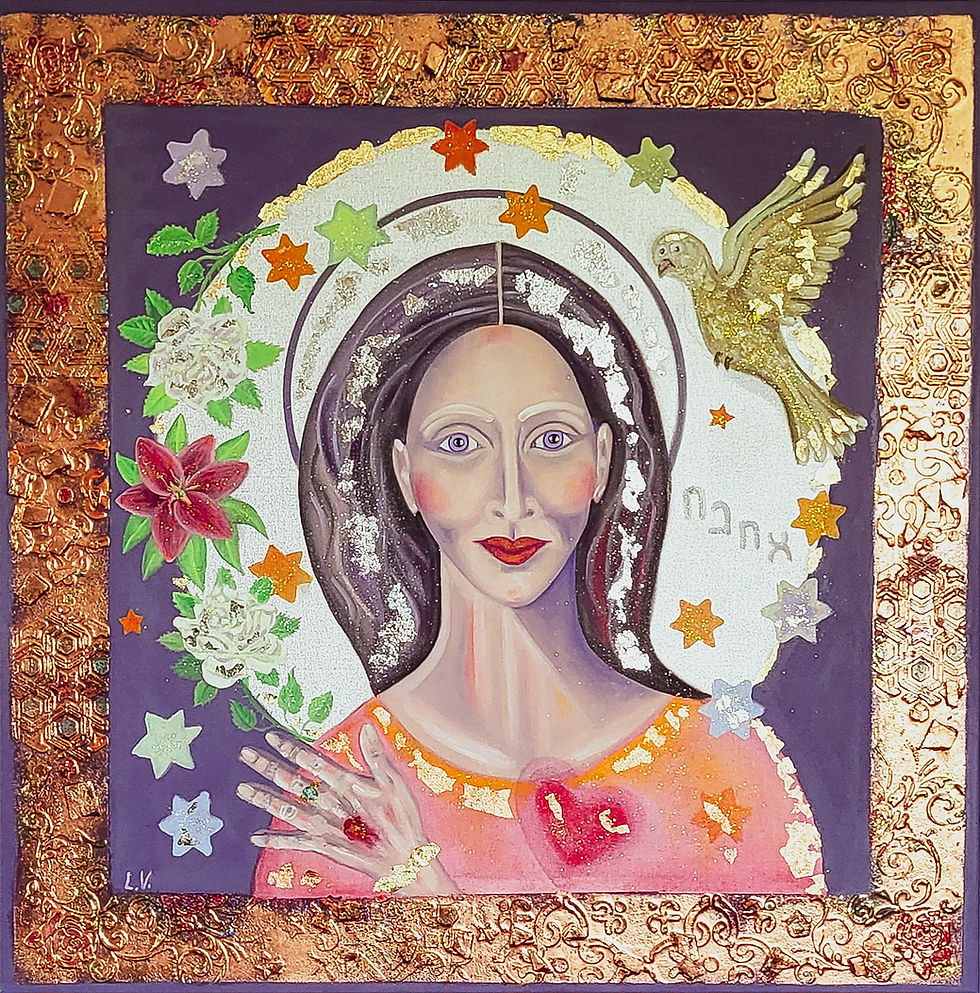
I have shaped a language of frontal figures whose stillness meets the restless movement around them. Each painting is a square — 90 by 90 by 4 centimetres — a format that remembers the authority of historical icons while remaining unmistakably contemporary. Within these boundaries, halos, birds, flowers, stars and wounded hands gather like constellations of feeling .


Most of my figures are deliberately androgynous, holding both masculine and feminine qualities in a single presence. Ani Aya and Lilith are exceptions — distinctly feminine gestures, distinctly feminine wounds. Lilith, especially, carries a question I have never wished to resolve: can mercy extend beyond the innocent?


My process is slow, layered, and physical: gypsum reliefs, fragments of tile and stone, acrylic grounds, resin, oil, mica pigments — twelve stages that give each work a literal and conceptual weight heavier than a painting of the same size would normally bear. Breakage becomes ornament; debris becomes structure. Resin protects, intensifies, distances — never erasing what lies beneath.
Angela writes that my technique insists on a simple truth: suffering cannot be erased, only reorganised within a new order shaped by care and endurance. I carry that line with me.

Across the series, the figure remains central — attentive eyes, wounded hands, hearts that refuse to hide. Flowers climb, birds hover, stars punctuate metallic fields. These motifs are my handwriting, shifting slightly from work to work so that repetition becomes ritual rather than formula. Angela sees my paintings as “composite presences: wounded bodies, witnesses, protectors and embodiments of inner consciousness”. She notes how suffering remains visible — yet never alone, always surrounded by signs of renewal: birds, flowers, radiant colour.
This is the balance I seek: vulnerability that does not collapse, beauty that does not deny pain.
The titles — Io Sono, Ani Hu, Ani Haya, Cœur de Courage — weave identity, consciousness and courage into the surface itself, becoming part of the image rather than captions outside it. Their multilingual nature creates a spiritual vocabulary that moves freely across cultures.


Angela writes that my accomplishment is “the forging of a recognisable contemporary idiom in which broken matter, painted flesh and reflective light become carriers of forgiveness, hope and enduring human consciousness”. I could not ask for a more precise description of what I try to do.
Modern Icons is my meditation on survival — on how wounds can coexist with radiance, how stillness can hold movement, how a single face can carry both darkness and light. And how, in the quiet weight of matter, hope can become visible.


Comments